
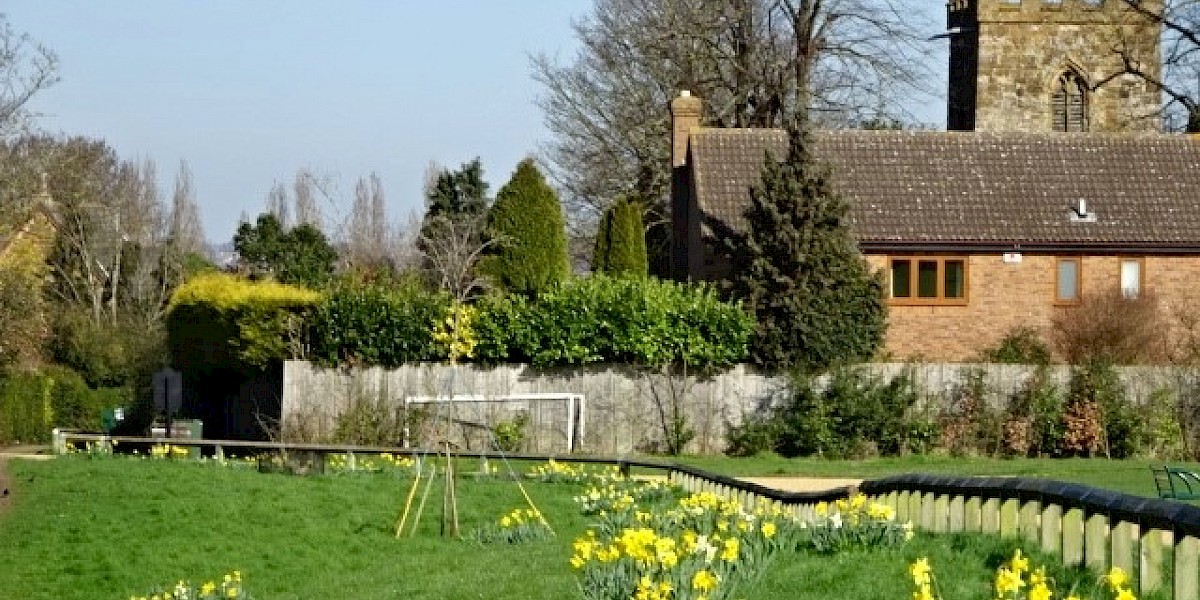
Just south of Northampton, Hardingstone occupies a distinctive position where town meets countryside, with open fields and the gentle valley of the River Nene shaping its outlook. Though now closely connected to the expanding urban edge, the village retains a clear identity of its own, with older lanes, stone cottages and long views across farmland giving it a settled, rural character. Its location near the A508 has long made it a natural stopping point on routes between Northampton and the villages further south, yet Hardingstone still feels removed from the bustle, framed by hedgerows and the soft contours of the Nene valley.
Hardingstone’s name is thought to derive from Old English, meaning the settlement associated with a person named Hearding, hinting at its early medieval origins. The village appears in the Domesday Book, and its development over the centuries reflects the agricultural rhythms of Northamptonshire life. Farming shaped both landscape and livelihood, and traces of ridge and furrow earthworks can still be discerned in surrounding fields, a quiet reminder of the open-field system that once dominated this part of the county.
The village is best known nationally for the magnificent Eleanor Cross that stands at its northern edge. Erected in the late thirteenth century by Edward I in memory of his wife, Queen Eleanor of Castile, the Hardingstone Cross is one of only three surviving examples of the original twelve. Its intricate stone carvings and tiered design make it one of Northamptonshire’s most important medieval monuments, drawing visitors who pause to admire its craftsmanship and reflect on its poignant royal story. Nearby, Delapré Abbey and its parkland provide further historic interest, linking the village to centuries of monastic and later country house life.
At the heart of Hardingstone stands the parish church of St Edmund, a handsome stone building with medieval origins and later additions. Its sturdy tower and timeworn churchyard anchor the village centre, where traditional houses cluster along the High Street. The blend of ironstone and limestone buildings, some thatched and others slate-roofed, creates a varied yet harmonious streetscape. Older farmhouses sit alongside more recent homes, illustrating the gradual growth that has allowed Hardingstone to evolve without losing its essential character.
Today the village supports a primary school, local pubs and community facilities that sustain an active social life. Events at the village hall, church gatherings and seasonal celebrations help maintain a strong sense of continuity between past and present. Footpaths lead out towards open countryside and along the Nene, offering residents and visitors alike a chance to explore the surrounding landscape on foot.
Hardingstone’s appeal lies in this balance: a place of national historic significance that remains, at its core, a living village. With its celebrated cross, its ancient church and its position on the threshold of Northampton’s southern gateway, it offers both a tangible link to England’s medieval past and a welcoming, close-knit community rooted firmly in the Northamptonshire countryside.
